Rhododendron Species of the Genus Rhododendron
Simplified Rhododendron Evolutionary Context
Click on nodes with ▶/▼ to expand/collapse branches.
Key References:
- Kron, K. A., Judd, W. S., Stevens, P. F., Crayn, D. M., Anderberg, A. A., Gadek, P. A., ... & Sytsma, K. J. (2002). Phylogenetic classification of Ericaceae: molecular and morphological evidence. The Botanical Review, 68, 335-423.
- Soza VL, Lindsley D, Waalkes A, et al. (2019). The Rhododendron Genome and Chromosomal Organization Provide Insight into Shared Whole-Genome Duplications across the Heath Family (Ericaceae). Genome Biology and Evolution, 11(12), 3353-3371. (Genome-level insights for Ericaceae)
Rhododendron simsii
Common Names
- Chinese: 映山红 (杜鹃)
- English: Sims Azalea, Indian Azalea
- Scientific: Rhododendron simsii
Taxonomy
Eukaryota; Viridiplantae; Streptophyta; Streptophytina; Embryophyta; Tracheophyta; Euphyllophyta; Spermatophyta; Magnoliopsida; Mesangiospermae; eudicotyledons; Gunneridae; Pentapetalae; asterids; Ericales; Ericaceae; Ericoideae; Rhodoreae; Rhododendron
Genome References
Yang FS, Nie S, Liu H, et al. Chromosome-level genome assembly of a parent species of widely cultivated azaleas. Nat Commun. 2020;11(1):5269. Published 2020 Oct 19.
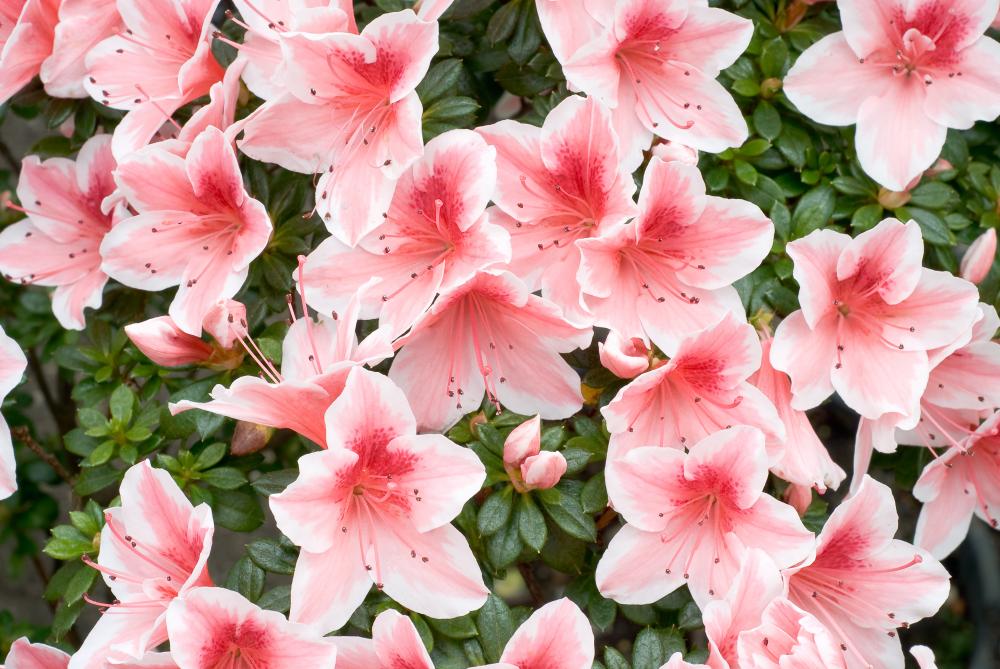
Rhododendron simsii plant
Description
Rhododendron simsii is a deciduous shrub of the genus Rhododendron in the Ericaceae family, growing 2-5 meters tall with numerous slender branches. The leaves are leathery, often clustered at branch tips, ovate, elliptical-ovate, or obovate in shape, with a shortly tapering tip, slightly rolled edges with fine teeth, dark green above, and pale whitish below; the corolla is broadly funnel-shaped or obovate, typically 2-6 flowers clustered at branch tips, in rose, bright red, or dark red colors, with a flowering period from April to May and a fruiting period from June to August.
Rhododendrons are widely distributed across Europe, Asia, and North America, with primary production in East Asia and Southeast Asia. In China, they are concentrated in the southwest and south-central regions, serving as a typical indicator plant of acidic soil in central-southern and southwestern China. Rhododendrons prefer acidic, fertile soil. They tolerate shade and favor warmth, while evergreen varieties thrive in humid, cool mountain air for optimal growth.
Rhododendron delavayi
Common Names
- Chinese: 马缨杜鹃
- English: Delavay's Rhododendron
- Scientific: Rhododendron delavayi
Taxonomy
Eukaryota; Viridiplantae; Streptophyta; Streptophytina; Embryophyta; Tracheophyta; Euphyllophyta; Spermatophyta; Magnoliopsida; Mesangiospermae; eudicotyledons; Gunneridae; Pentapetalae; asterids; Ericales; Ericaceae; Ericoideae; Rhodoreae; Rhododendron
Genome References
Zhang L, Xu P, Cai Y, et al. The draft genome assembly of Rhododendron delavayi Franch. var. delavayi.Gigascience. 2017;6(10):1-11.
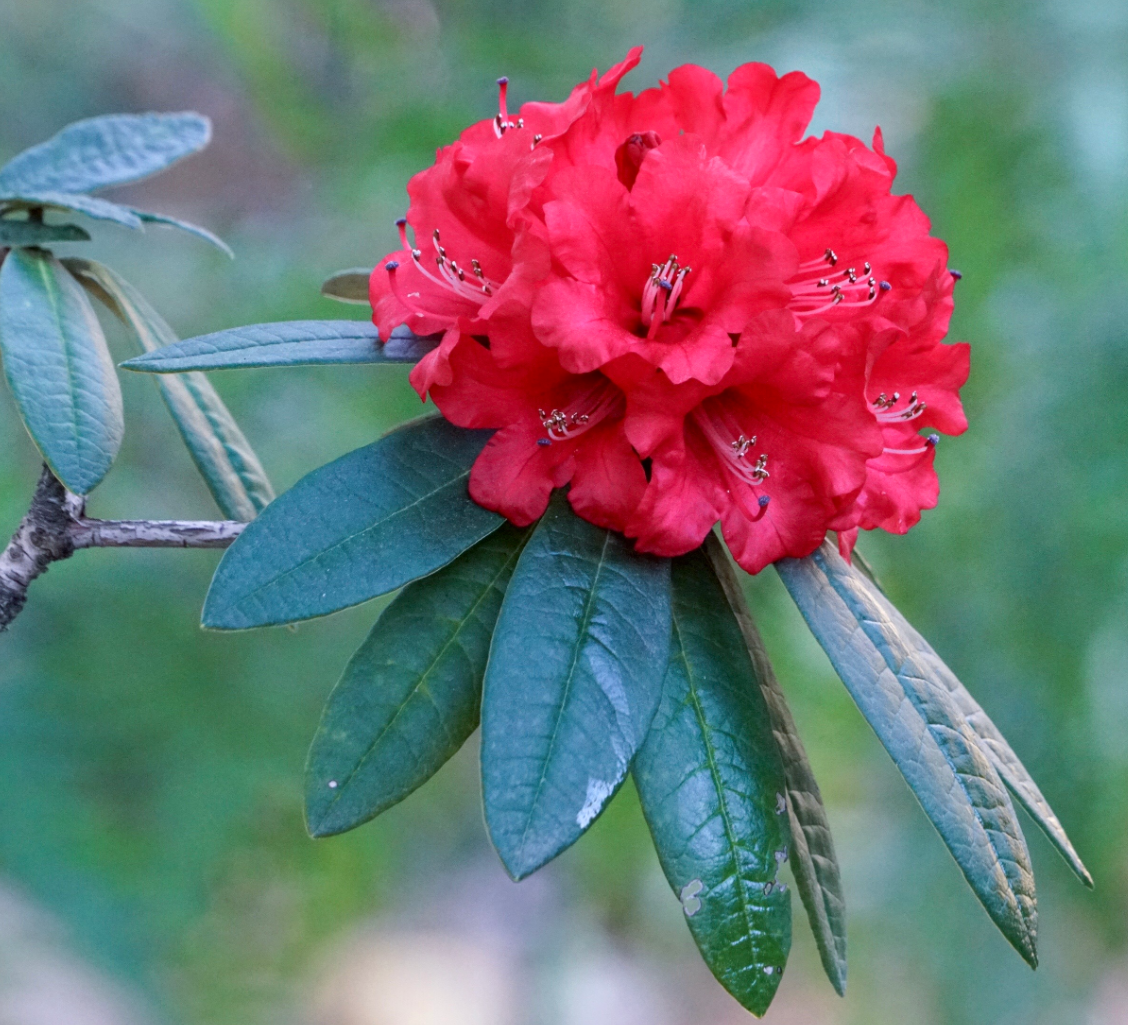
Rhododendron delavayi plant
Description
Rhododendron delavayi is an evergreen shrub or small tree of the genus Rhododendron in the Ericaceae family, reaching a height of 1-7 meters. The bark is light grayish-brown; young branches are covered with white fuzz; the leaves are leathery, oblong-lanceolate in shape; the terminal umbel-like inflorescence has a main axis densely covered with reddish-brown fuzz, flower stalks densely covered with light brown fuzz, bracts obovate with a short pointed tip, the calyx externally fuzzy and glandular, a deep red bell-shaped corolla, a conical ovary densely covered with reddish-brown hairs; the capsule is elongated cylindrical, dark brown; flowering period is May; fruiting period is December. It is named so because its bright red flowers resemble horsehair.
Rhododendron henanense
Common Names
- Chinese: 河南杜鹃
- English: Henan Rhododendron
- Scientific: Rhododendron henanense
Taxonomy
Eukaryota; Viridiplantae; Streptophyta; Streptophytina; Embryophyta; Tracheophyta; Euphyllophyta; Spermatophyta; Magnoliopsida; Mesangiospermae; eudicotyledons; Gunneridae; Pentapetalae; asterids; Ericales; Ericaceae; Ericoideae; Rhodoreae; Rhododendron
Genome References
Zhou XJ, Li JT, Wang HL, et al. The chromosome-scale genome assembly, annotation and evolution of Rhododendron henanense subsp. lingbaoense. Mol Ecol Resour. 2022;22(3):988-1001.
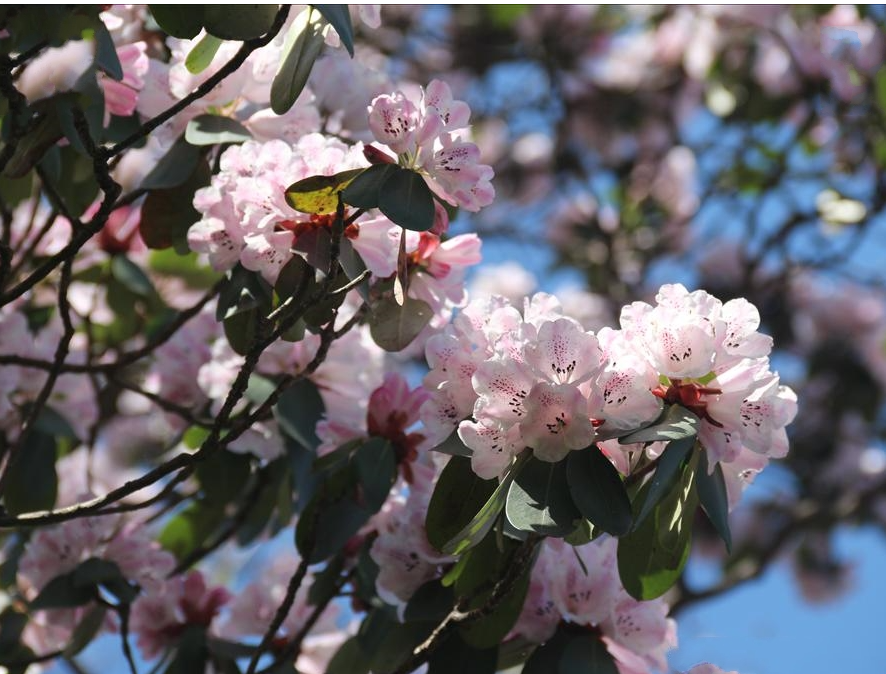
Rhododendron henanense plant
Description
Rhododendron henanense: A shrub, 3-5 meters tall; branches stout, young branches greenish or light brown, smooth and hairless, with branches below the inflorescence about 5 mm in diameter. Leaves are mostly clustered at the branch tips, leathery, elliptical or oblong-elliptical, dark green above, pale yellowish-green below, both surfaces hairless. Racemose umbel-like inflorescence with 12-13 flowers; corolla bell-shaped and funnel-like, 2.5-3 cm long, white with purplish-red spots, narrow at the base, 5-lobed, lobes nearly round. Capsule cylindrical, often curved. Flowering period is May.
It grows under mixed coniferous and broadleaf forests at an elevation of 1,830 meters. Native to central Henan, China. This species has beautiful, vividly colored flowers and is cultivated, possessing high horticultural value.
Rhododendron ovatum
Common Names
- Chinese: 马银花
- English: Ovate-leaved Rhododendron
- Scientific: Rhododendron ovatum
Taxonomy
Eukaryota; Viridiplantae; Streptophyta; Streptophytina; Embryophyta; Tracheophyta; Euphyllophyta; Spermatophyta; Magnoliopsida; Mesangiospermae; eudicotyledons; Gunneridae; Pentapetalae; asterids; Ericales; Ericaceae; Ericoideae; Rhodoreae; Rhododendron
Genome References
Wang X, Gao Y, Wu X, et al. High-quality evergreen azalea genome reveals tandem duplication-facilitated low-altitude adaptability and floral scent evolution.Plant Biotechnol J. 2021;19(12):2544-2560.
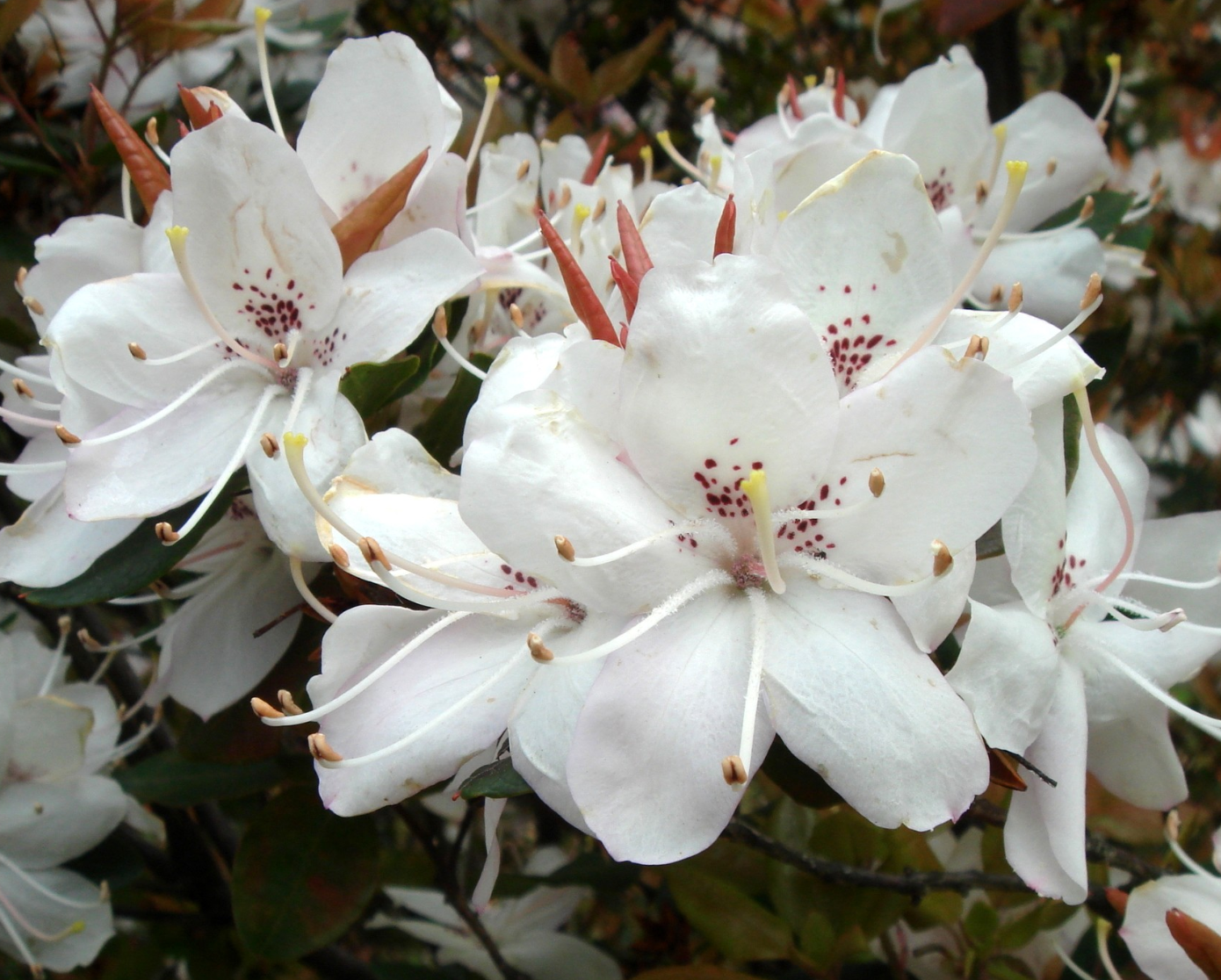
Rhododendron ovatum plant
Description
Rhododendron ovatum is an evergreen shrub of the genus Rhododendron in the Ericaceae family. The plant can grow up to 4 meters tall. Young branches are covered with short-stalked glands and short soft hairs; leaves are broadly ovate or ovate-elliptical, with abruptly pointed or blunt tips, glossy above, with a raised midrib below and inconspicuous lateral veins; flowers are solitary at the branch tips in leaf axils, covered with short soft hairs and short-stalked glands, calyx lobes hairless at the edges, corolla radially spreading, pale purple, purple, or pink with pink spots; the capsule is covered with stiff hairs, and the persistent calyx enlarges to enclose the fruit; flowering period is April to May; fruiting period is July to October.
It is widely distributed across provinces in China's Yangtze River Basin, extending east to Taiwan and southwest to Sichuan, Yunnan, and other areas. It prefers a warm and humid climate, thrives in light but tolerates partial shade, is slightly cold-resistant, and favors loose, fertile acidic soil. It is commonly found under sparse forests or on the northern foothills in acidic red-yellow soil rich in humus. The typical propagation method is seed propagation.
Rhododendron williamsianum
Common Names
- Chinese: 圆叶杜鹃
- English: Williams' Rhododendron
- Scientific: Rhododendron williamsianum
Taxonomy
Eukaryota; Viridiplantae; Streptophyta; Streptophytina; Embryophyta; Tracheophyta; Euphyllophyta; Spermatophyta; Magnoliopsida; Mesangiospermae; eudicotyledons; Gunneridae; Pentapetalae; asterids; Ericales; Ericaceae; Ericoideae; Rhodoreae; Rhododendron
Genome References
Soza VL, Lindsley D, Waalkes A, et al. The Rhododendron Genome and Chromosomal Organization Provide Insight into Shared Whole-Genome Duplications across the Heath Family (Ericaceae). Genome Biol Evol. 2019;11(12):3353-3371.
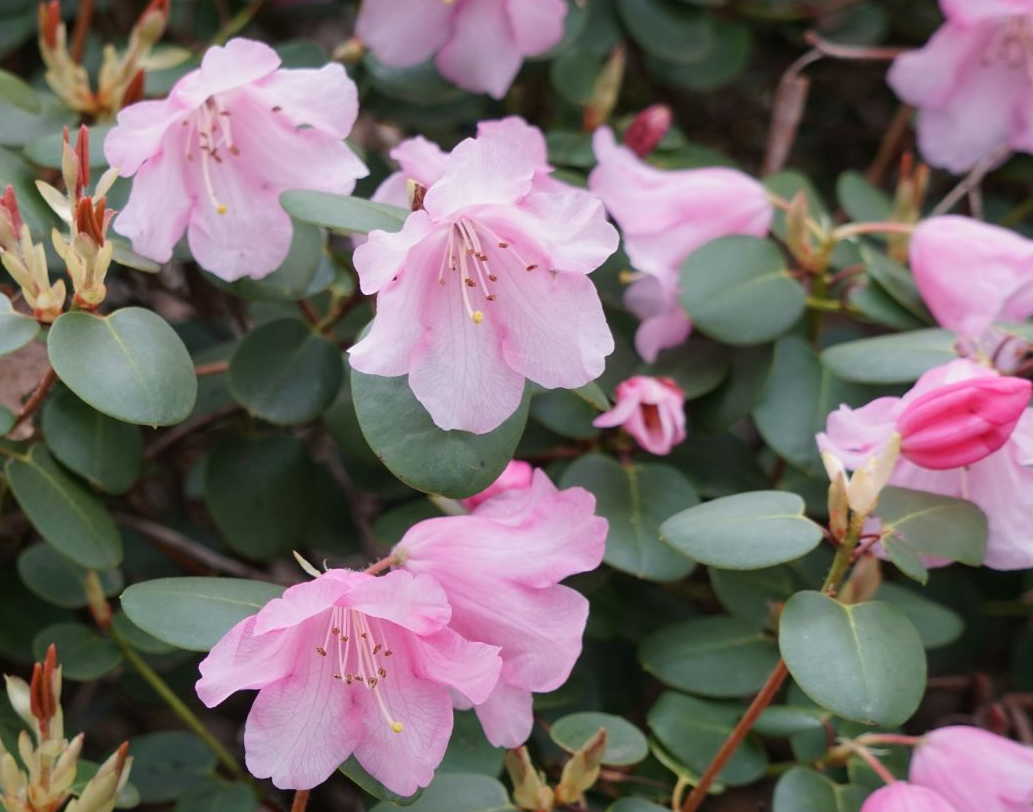
Rhododendron williamsianum plant
Description
Rhododendron williamsianum: A shrub, 1-2 meters tall, hairless. Leaves are leathery, broadly ovate or nearly round, with a rounded apex and a fine pointed tip, a cordate or nearly round base, dark green and hairless above, grayish-white below with clearly visible veins. Racemose umbel-like inflorescence with 2-6 flowers; corolla broadly bell-shaped, 3.5-4 cm long, 4-4.5 cm in diameter at the mouth, pink without spots, 5-6 lobed, with nearly round lobes. Capsule cylindrical, 1.5-2.5 cm long, 6 mm in diameter, with glands. Flowering period is April to May, fruiting period is August to September.
It is native to southwestern Sichuan (Mount Emei), western Guizhou, northeastern Yunnan, and southeastern Tibet in China. It grows in sparse forests on slopes and rocky edges at elevations of 1,800-2,800 meters. It has significant medicinal value.