Prunus Species of the Genus Prunus
Simplified Prunus Evolutionary Tree
Click on nodes with ▶/▼ to expand/collapse branches. Tree is expanded to the Subgenus level by default.
Key Reference for Prunus Phylogeny:
- Shi, S., Li, J., Sun, J., Yu, J., & Zhou, S. (2013). Phylogeny and classification of Prunus sensu lato (Rosaceae). Journal of Integrative Plant Biology, 55(11), 1069-1079.
Prunus armeniaca - Apricot blossom
Common Names
- Chinese: 杏花
- English: Apricot blossom
- Scientific: Prunus armeniaca
Taxonomy
Eukaryota; Viridiplantae; Streptophyta; Streptophytina; Embryophyta; Tracheophyta; Euphyllophyta; Spermatophyta; Magnoliopsida; Mesangiospermae; eudicotyledons; Gunneridae; Pentapetalae; rosids; fabids; Rosales; Rosaceae; Amygdaloideae; Amygdaleae; Prunus
Genome References
Lin Wang#, Mengzhen Huang#, Zhuo Chen#, Jiao Zhang#, Xuewen Wang#. Genome and resequencing 307 genotypes provide insights into the domestication and quality-trait genetics of apricots.
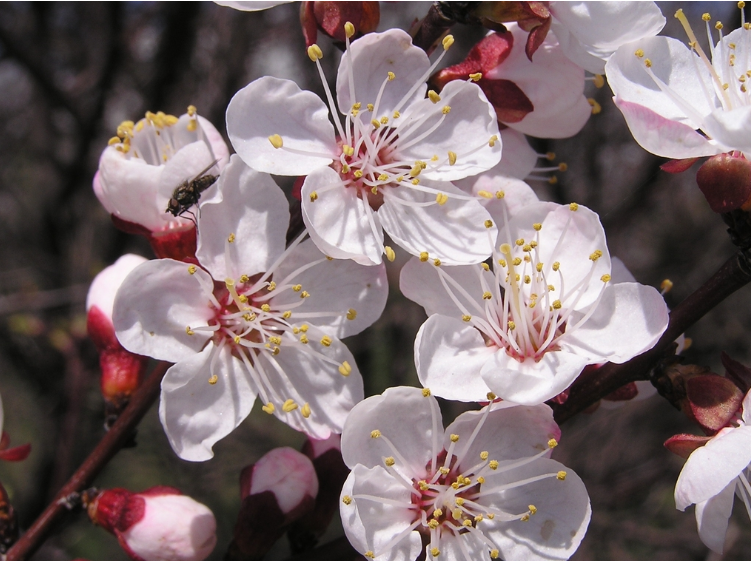
Prunus armeniaca
Description
Prunus armeniaca is a small tree, 8–12 m (26–39 ft) tall, with a trunk up to 40 cm (16 in) in diameter and a dense, spreading canopy. The leaves are ovate, 5–9 cm (2.0–3.5 in) long and 4–8 cm (1.6–3.1 in) wide, with a rounded base, a pointed tip and a finely serrated margin. The flowers are 2–4.5 cm (0.8–1.8 in) in diameter, with five white to pinkish petals;they are produced singly or in pairs in early spring before the leaves.
The fruit is a drupe similar to a small peach, 1.5–2.5 cm (0.6–1.0 in) diameter (larger in some modern cultivars), from yellow to orange, often tinged red on the side most exposed to the sun; its surface can be smooth (botanically described as: glabrous) or velvety with very short hairs (botanically: pubescent).
Prunus mume - Plum Blossom
Common Names
- Chinese: 梅花
- English: plum blossom
- Scientific: Prunus mume
Taxonomy
Eukaryota; Viridiplantae; Streptophyta; Streptophytina; Embryophyta; Tracheophyta; Euphyllophyta; Spermatophyta; Magnoliopsida; Mesangiospermae; eudicotyledons; Gunneridae; Pentapetalae; rosids; fabids; Rosales; Rosaceae; Amygdaloideae; Amygdaleae; Prunus
Genome References
Zheng T, Li P, Zhuo X, et al. The chromosome-level genome provides insight into the molecular mechanism underlying the tortuous-branch phenotype of Prunus mume.New Phytol.
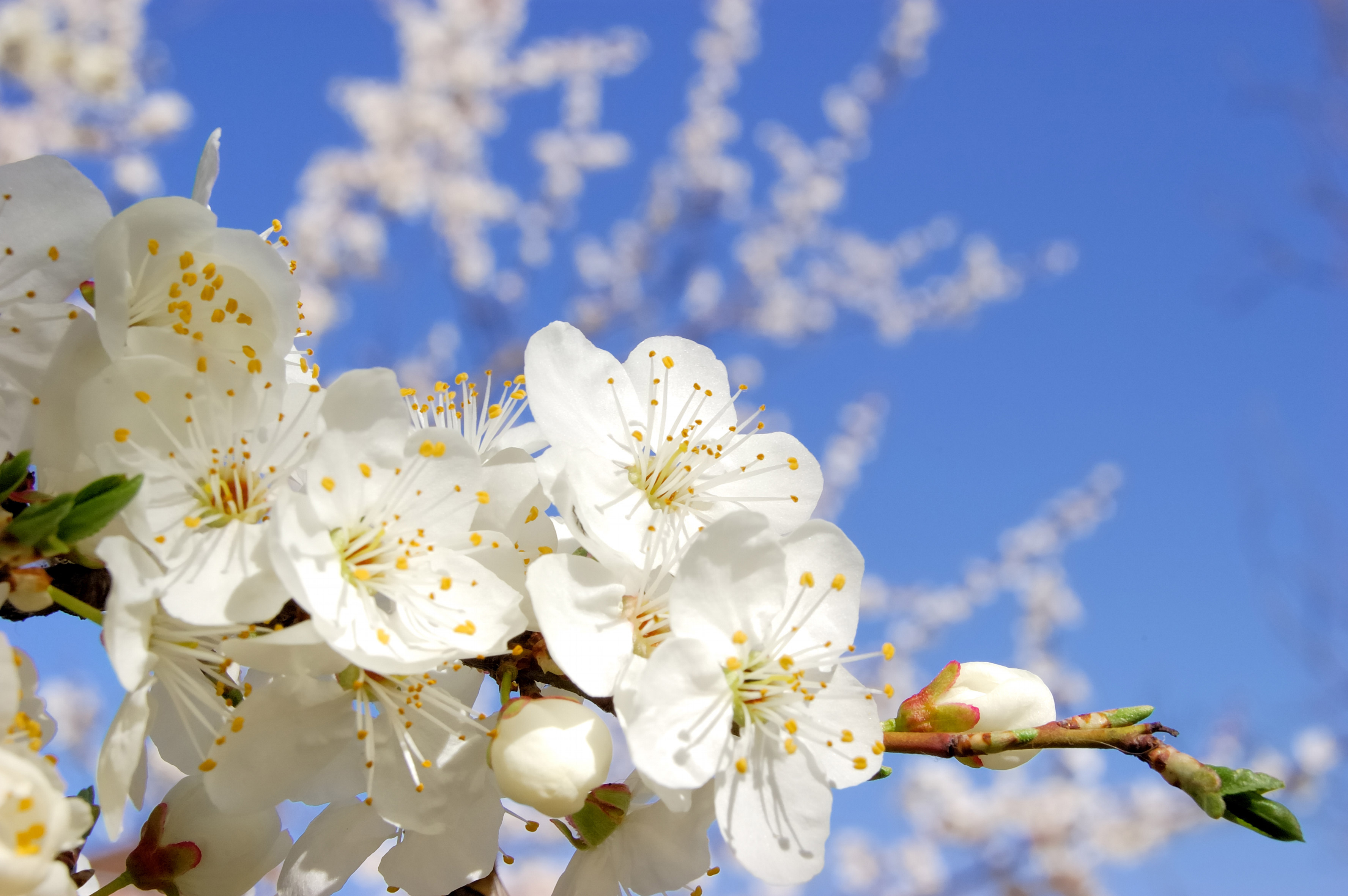
Prunus mume plant
Description
Prunus mume is a deciduous tree that starts to flower in mid-winter, typically around January until late February in East Asia. It can grow to 4–10 m (13–33 ft) tall. The flowers are 2–2.5 cm (0.79–0.98 in) in diameter and have a strong fragrant scent. They have colors in varying shades of white, pink, and red. The leaves appear shortly after the petals fall, are oval-shaped with a pointed tip, and are 4–8 cm long and 2.5–5 cm wide. The fruit ripens in early summer, around June and July in East Asia, and coincides with the East Asian rainy season, the meiyu (梅雨, "plum rain").The drupe is 2–3 cm (0.79–1.18 in) in diameter with a groove running from the stalk to the tip. The skin turns yellow, sometimes with a red blush, as it ripens, and the flesh becomes yellow. The tree is cultivated for its fruit and flowers.
Prunus persica - Peach Blossom
Common Names
- Chinese: 桃花
- English: peach blossom
- Scientific: Prunus persica
Taxonomy
Eukaryota; Viridiplantae; Streptophyta; Streptophytina; Embryophyta; Tracheophyta; Euphyllophyta; Spermatophyta; Magnoliopsida; Mesangiospermae; eudicotyledons; Gunneridae; Pentapetalae; rosids; fabids; Rosales; Rosaceae; Amygdaloideae; Amygdaleae; Prunus
Genome References
Zhang H, Lian X, Gao F, et al. A gap-free genome of pillar peach (Prunus persica L.) provides new insights into branch angle and double flower traits. Plant Biotechnol J. 2025;23(1):81-83.
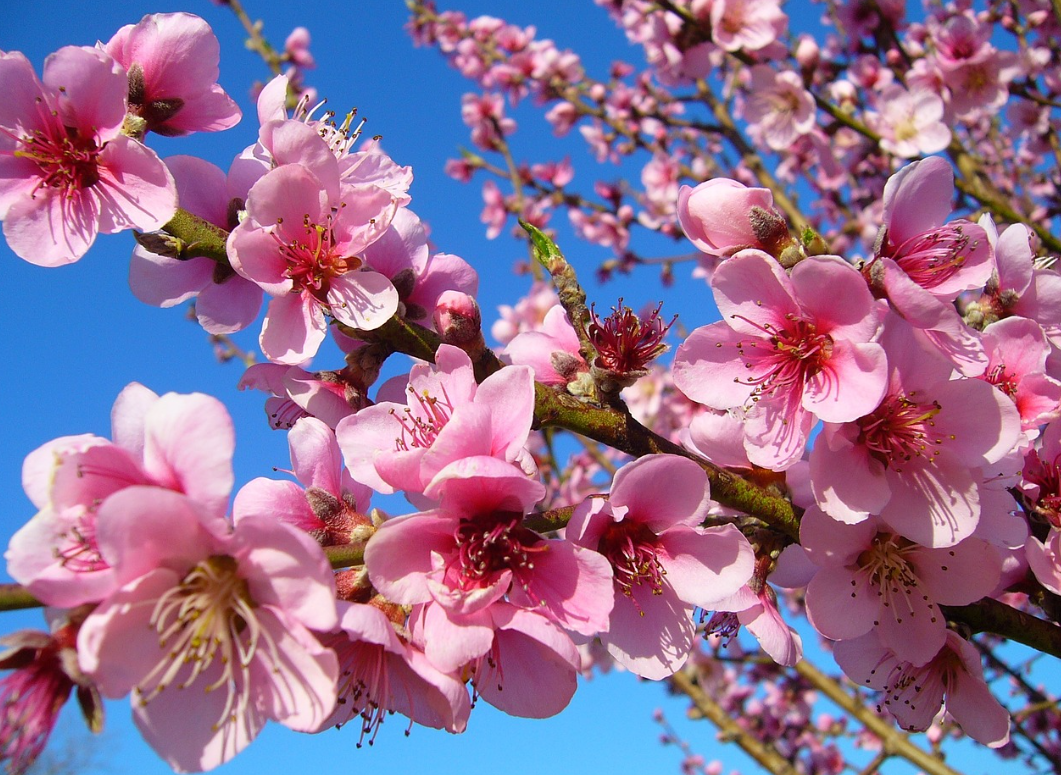
Prunus persica plant
Description
Peach blossom, the flower of the peach tree, a perennial deciduous plant of the genus Prunus persica in the Rosaceae family. The tree has a gray-brown trunk, elliptical-lanceolate leaves with serrated edges, and alternate single leaves. The flowers are solitary, blooming before the leaves appear, and the fruit is a nearly spherical drupe. The flowering period is from March to April, and the fruiting period is from June to September.
Peach blossoms originated in central and northern China, with a long history of cultivation, and later spread to surrounding regions of Asia. They are also grown in warm areas such as France and the Mediterranean. Peach trees prefer warm, humid, and well-lit environments, being both cold- and heat-tolerant. They thrive in fertile, well-drained loam or sandy soil but do not tolerate alkaline soil. Peach blossoms are generally propagated by seeding or grafting.
Prunus salicina - Chinese plum
Common Names
- Chinese: 李花
- English: Chinese plum
- Scientific: Prunus salicina
Taxonomy
Eukaryota; Viridiplantae; Streptophyta; Streptophytina; Embryophyta; Tracheophyta; Euphyllophyta; Spermatophyta; Magnoliopsida; Mesangiospermae; eudicotyledons; Gunneridae; Pentapetalae; rosids; fabids; Rosales; Rosaceae; Amygdaloideae; Amygdaleae; Prunus
Genome References
Huang Z, Shen F, Chen Y, Cao K, Wang L. Chromosome-scale genome assembly and population genomics provide insights into the adaptation, domestication, and flavonoid metabolism of Chinese plum.Plant J. 2021;108(4):1174-1192.
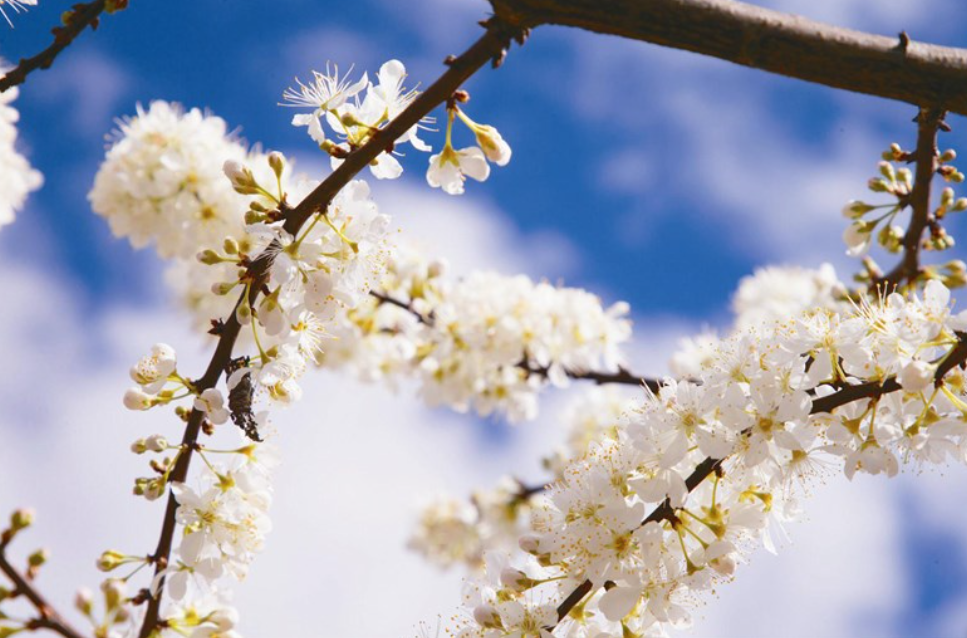
Prunus salicina plant
Description
Plum blossom, the flower of the plum tree. The plant "plum," also known as "jade plum" or historically called "Jiaqingzi," originated in China and is a deciduous small tree of the Rosaceae family. The flowering period varies by region and specific variety, typically occurring in March in southern China and from April to May north of the Qinling-Huaihe Line.
The white flowers, though small, are abundant, simple, and refreshingly elegant. The fruit is yellow or deep red, with the pit developing from the ovule and the flesh from the ovary wall. Besides being eaten fresh, it can also be processed into dried plums or plum sauce.
Prunus campanulata - Taiwan cherry
Common Names
- Chinese: 钟花樱
- English: Taiwan cherry
- Scientific: Prunus campanulata
Taxonomy
Eukaryota; Viridiplantae; Streptophyta; Streptophytina; Embryophyta; Tracheophyta; Euphyllophyta; Spermatophyta; Magnoliopsida; Mesangiospermae; eudicotyledons; Gunneridae; Pentapetalae; rosids; fabids; Rosales; Rosaceae; Amygdaloideae; Amygdaleae; Prunus
Genome References
Jiang D, Li Y, Zhuge F, et al. The telomere-to-telomere genome of flowering cherry (Prunus campanulata) reveals genomic evolution of the subgenus Cerasus.Gigascience. 2025;14:giaf009.
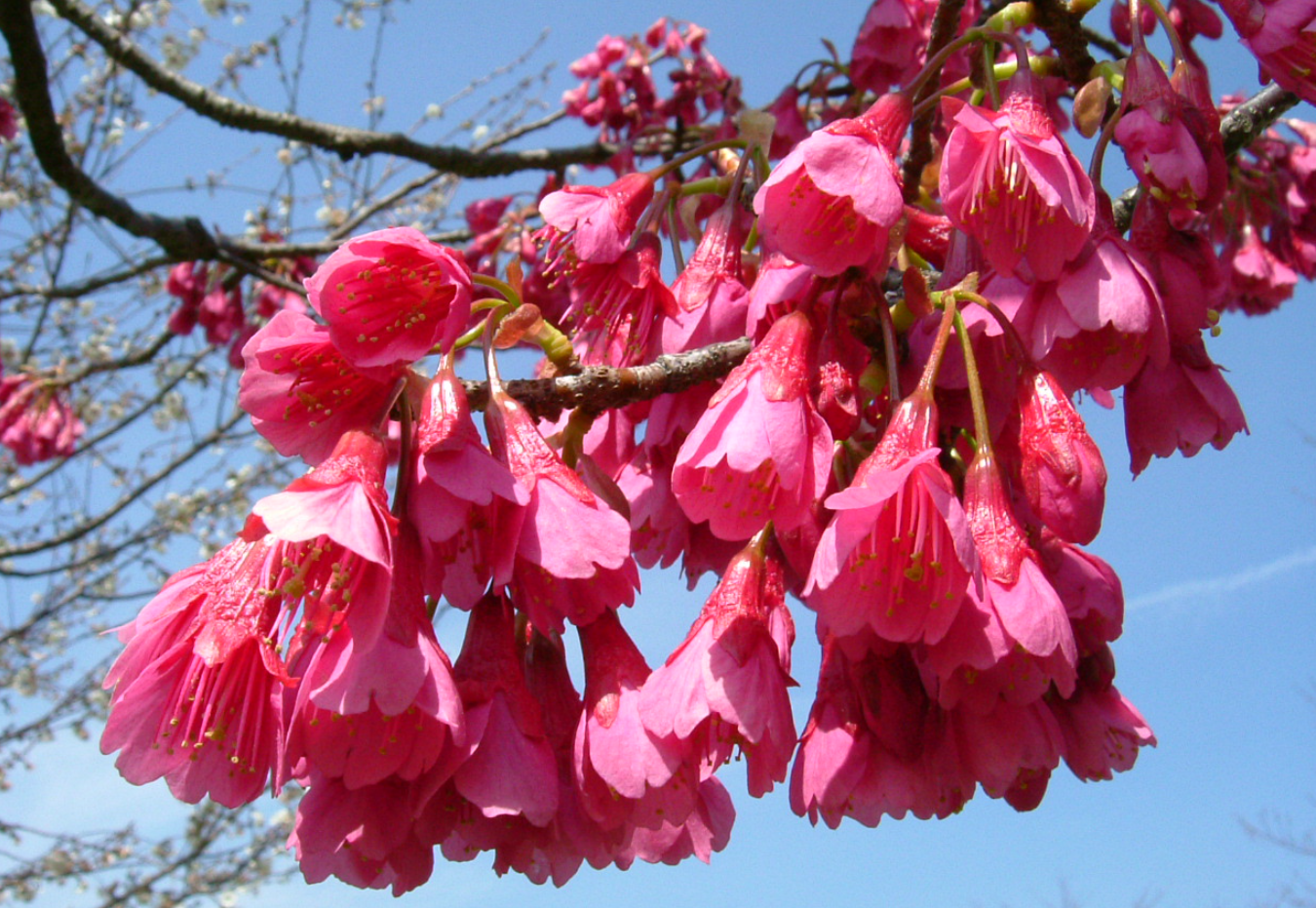
Prunus campanulata
Description
It is commonly known as Taiwan cherry or bellflower cherry, is a deciduous tree native to southern China and widely distributed in Taiwan, Japan's Ryukyu Islands, and northern Vietnam. It typically grows to 3–8 meters tall and is renowned for its early-blooming, bright pink, bell-shaped flowers, which make it a popular ornamental species.