Nelumbo Species
Simplified Nelumbonaceae Evolutionary Context
Click on nodes with ▶/▼ to expand/collapse branches.
Key References:
- The Angiosperm Phylogeny Group. (2016). An update of the Angiosperm Phylogeny Group classification for the orders and families of flowering plants: APG IV. Botanical Journal of the Linnean Society, 181(1), 1-20.
- Qi, H., et al. (2023). The high-quality genome of lotus reveals tandem duplicate genes involved in stress response and secondary metabolites biosynthesis. Horticulture Research, 10(5), uhad040. (Specific to N. nucifera genome)
Nelumbo nucifera
Common Names
- Chinese: 莲花
- English: Lotus (Sacred Lotus)
- Scientific: Nelumbo nucifera
Taxonomy
Eukaryota; Viridiplantae; Streptophyta; Streptophytina; Embryophyta; Tracheophyta; Euphyllophyta; Spermatophyta; Magnoliopsida; Mesangiospermae; eudicotyledons; Proteales; Nelumbonaceae; Nelumbo
Genome References
Ming, R., VanBuren, R., Liu, Y. et al. Genome of the long-living sacred lotus (Nelumbo nucifera Gaertn.). Genome Biol 14, R41 (2013).
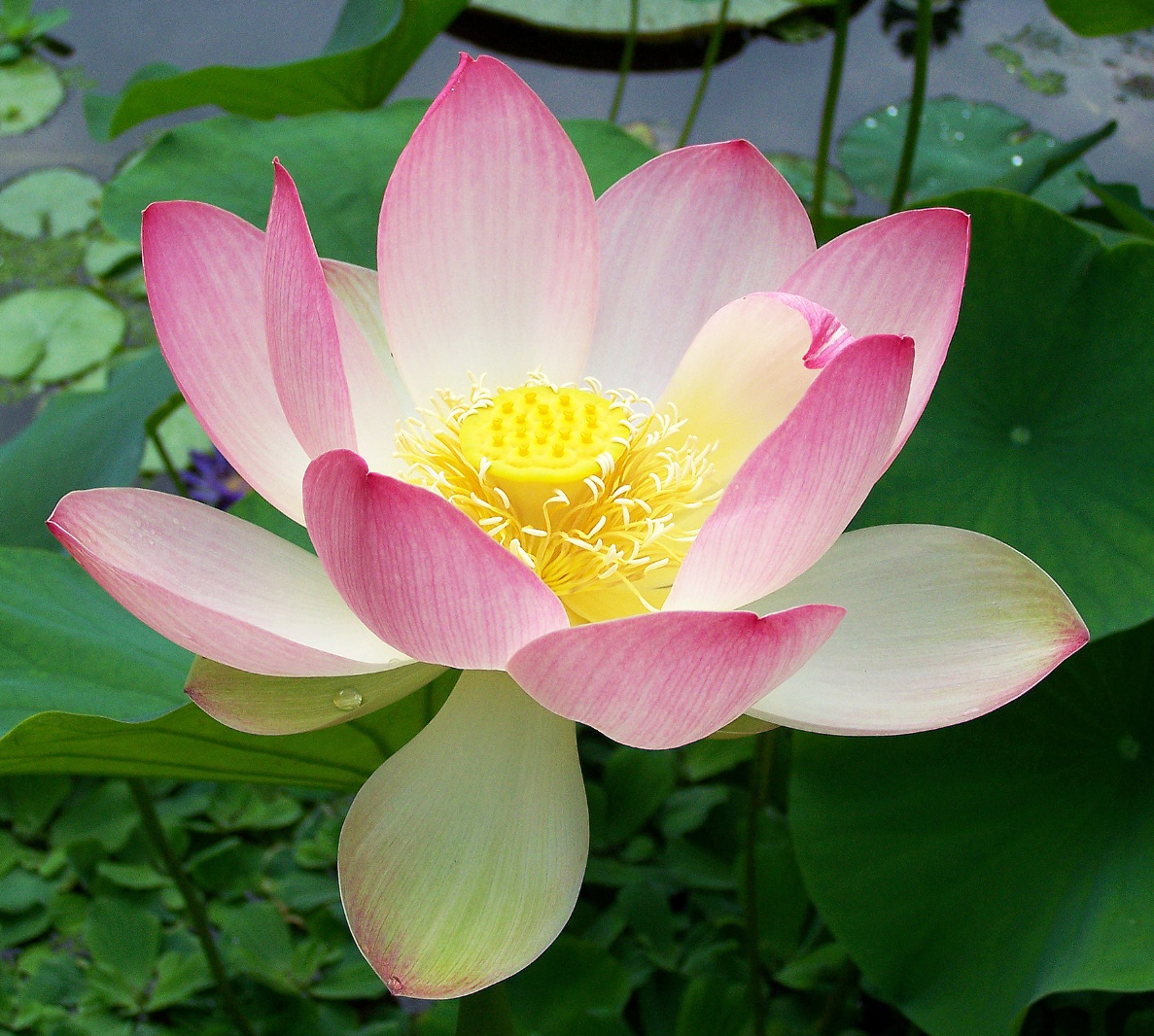
Nelumbo nucifera
Description
Under favorable circumstances its seeds may remain viable for many years, with the oldest recorded lotus germination being from that of seeds 1,300 years old recovered from a dry lakebed in northeastern China. Therefore, the species is regarded as a symbol of purity, longevity, and honor in Chinese and many other Asian cultures.
It is a perennial aquatic plant with creeping rhizomes that grow in the mud of ponds and lakes. The leaves are peltate, orbicular, and large, with long petioles that hold them above the water surface. The flowers are solitary, large, and showy, with pink or white petals. The plant is cultivated for its edible rhizomes and seeds, and for its ornamental value.