Dianthus Species
Simplified Caryophyllaceae Evolutionary Context (Genus Dianthus)
Click on nodes with ▶/▼ to expand/collapse branches.
Key References for Caryophylleae Phylogeny:
- Madhani, H., Rabeler, R., Pirani, A., Oxelman, B., Heubl, G., & Zarre, S. (2018). Untangling phylogenetic patterns and genus history in Caryophylleae (Caryophyllaceae) with strong incongruence among BRCA1, BRCA2, and plastid DNA. Systematic Biology, 67(1), 93-111.
- Lan L, Leng L, Liu W, et al. (2023). The haplotype-resolved telomere-to-telomere carnation (Dianthus caryophyllus) genome reveals the correlation between genome architecture and gene expression. Horticulture Research, 11(1), uhad244. (Specific to D. caryophyllus genome)
Dianthus caryophyllus
Common Names
- Chinese: 康乃馨
- English: Carnation
- Scientific: Dianthus caryophyllus
Taxonomy
Eukaryota; Viridiplantae; Streptophyta; Streptophytina; Embryophyta; Tracheophyta; Euphyllophyta; Spermatophyta; Magnoliopsida; Mesangiospermae; eudicotyledons; Gunneridae; Pentapetalae; Caryophyllales; Caryophyllaceae; Caryophylloideae; Caryophylleae; Dianthus
Genome References
Lan L, Leng L, Liu W, et al.. The haplotype-resolved telomere-to-telomere carnation (Dianthus caryophyllus) genome reveals the correlation between genome architecture and gene expression.Hortic Res. 2023;11(1):uhad244. Published 2023 Nov 27.
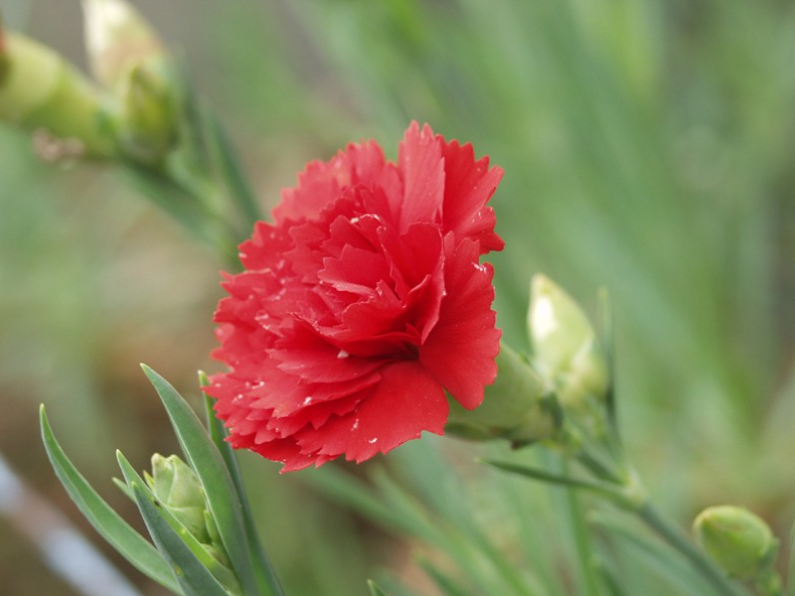
Dianthus caryophyllus
Description
Dianthus caryophyllus, commonly known as the carnation or clove pink, is a species of flowering plant in the family Caryophyllaceae, native to the Mediterranean region. It is a herbaceous perennial that typically grows to a height of 30–80 cm (12–31 inches). The plant is characterized by its slender, grayish-green leaves, which are opposite, linear, and slightly fleshy, giving it a distinctive appearance.
The flowers of Dianthus caryophyllus are its most notable feature, often borne singly or in small clusters at the ends of the stems. They have a tubular calyx with five lance-shaped teeth and petals that are broadly obovate, often with fringed or serrated edges. The blooms come in a wide range of colors, including pink, red, white, yellow, and sometimes bicolored varieties, emitting a sweet, spicy fragrance reminiscent of cloves. Flowering typically occurs from late spring to summer, though in cultivation it can be extended with proper care.